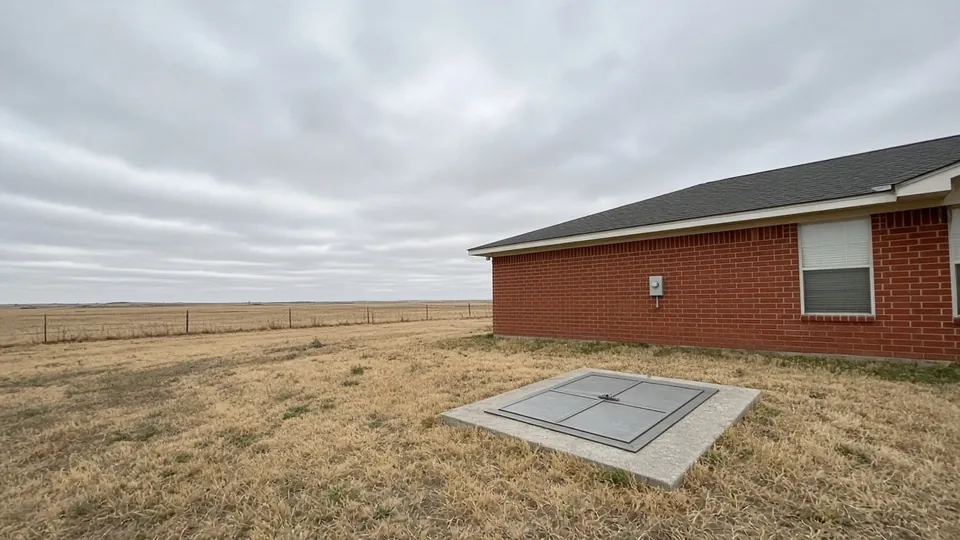
Flush steel storm shelter door in the lawn behind a brick ranch home in the Texas Panhandle

Amarillo, Texas & the Panhandle

Storm Shelters in Amarillo, TX

Request information on underground, basement, garage floor and above-ground shelters, safe rooms and prefabricated bunkers from independent installers serving Amarillo.

Referral service. Shelters are sold and installed by independent local installers.

Storm shelter options for Amarillo families

Amarillo sits in tornado country, and most homes here have no basement. This site explains the six main types of storm shelters, what published sources say they cost, and lets you send one estimate request that is shared with independent local installers.

On May 15, 1949 an F4 tornado touched down in south Amarillo, hit the Tradewinds airport area and crossed about 20 miles of Randall and Potter Counties, damaging about 200 homes. The NWS Amarillo top weather events list records 7 deaths and 82 injuries for that event. According to NWS Amarillo history, a Weather Bureau radio broadcast warned residents before formal tornado warnings existed.

Requests come from across the city, including Wolflin, Bivins, Puckett, Sleepy Hollow, Quail Creek, The Greenways, City View, Westover, Belmar, Tradewinds, Heritage Hills, Soncy Park, Hillside Terrace and Redstone (neighborhood names from the City of Amarillo neighborhood map). Older central homes such as Wolflin and Bivins usually need a retrofit like a garage floor or in-ground shelter, while newer southwest areas such as The Greenways and City View can add a safe room during construction.

Referral service notice: Storm Shelters Amarillo (stormsheltersamarillo.com) is a referral service operated by Silvano Para. We do not sell, build or install storm shelters. Your estimate request is shared with independent local installers who may contact you; availability is not guaranteed and we may receive a fee from them. We do not endorse any installer: ask about permits, insurance and ICC 500 / FEMA P-361 testing before hiring. Cost figures are published FEMA and FLASH ranges, not quotes. Photos are example photos. Contact: use the request form.

Types of Storm Shelters in Amarillo

Six types of storm shelters can be requested here: underground or in-ground shelters, basement tornado shelters, garage floor shelters, above ground shelters, safe rooms and prefabricated bunkers. Each section explains how the type works and what to ask installers before you hire one.

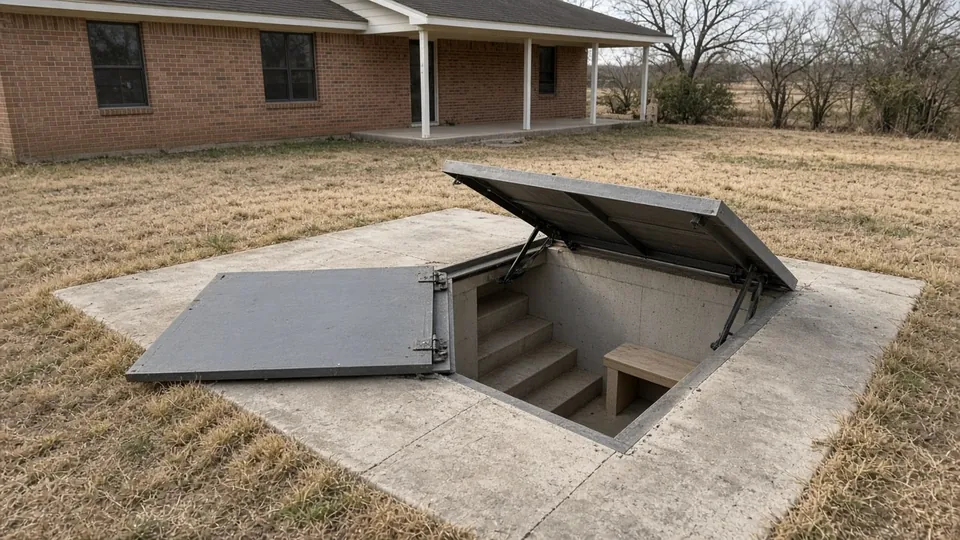
Open in-ground storm shelter with concrete steps in a Panhandle backyard

Underground / In-Ground Storm Shelters in Amarillo

An underground or in-ground storm shelter is a steel or concrete unit buried in the yard, reached by a hatch and steps. It keeps people below grade, out of the path of wind-borne debris. Send a estimate request and independent installers can review your yard.

In-ground shelters suit many Amarillo lots because the Panhandle is flat and most homes have no basement. The unit sits in an excavated pit, is anchored or backfilled so it cannot float or shift, and usually has a sloped door that sheds rain.

Questions worth asking: how the shelter is waterproofed and drained, how it is ventilated, whether the door can be opened from inside if debris lands on it, and whether the unit has been tested to the ICC 500 standard that FEMA P-361 refers to.

Distance from the house matters. A yard shelter must be reachable within the short time a tornado warning gives, including for children, older relatives and pets. Utility lines must be located before digging, and building work inside Amarillo city limits generally needs a City permit.
More about underground shelters →

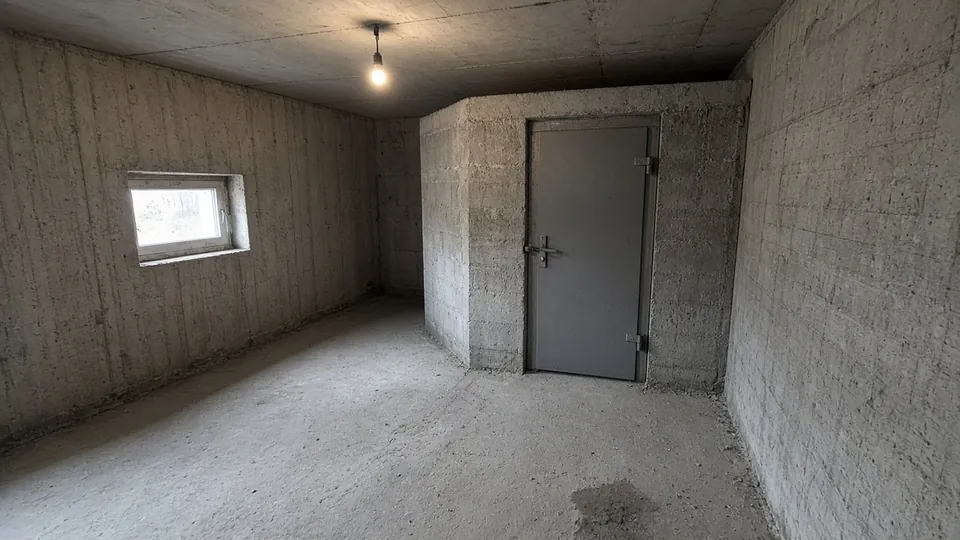
Reinforced concrete shelter room with a steel door in a home basement

Basement Tornado Shelters in Amarillo

A basement tornado shelter is a reinforced room built inside an existing or new basement, with walls, ceiling and door designed for extreme wind and debris. FEMA P-320 notes that basement areas can be designed as safe rooms. In Amarillo, the work generally needs a City permit.

A basement is already below ground, but an ordinary basement is not automatically a shelter: the floor above can collapse and debris can enter through stairs and windows. A shelter room adds reinforced walls, a reinforced ceiling and a tested door.

The City of Amarillo residential permits page applies the 2021 IRC with city amendments and notes that basements under 400 sq ft without escape openings shall be designed as a storm shelter. That makes it worth discussing shelter design early if you are adding a small basement.

Ask the installer how the room connects to the existing foundation, how it is ventilated and how they will handle moisture, since below-grade rooms in older Amarillo homes such as those in Wolflin or Bivins can collect water.

More about basement shelters →

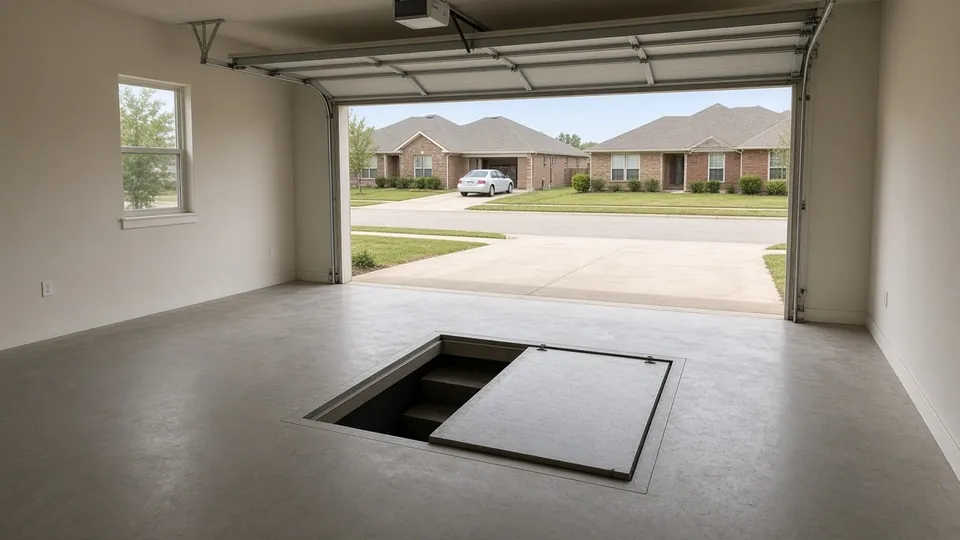
Garage floor storm shelter hatch set into a concrete slab

Garage Floor Storm Shelters in Amarillo

A garage floor storm shelter is a below-floor unit set into a hole cut in the garage slab, closed by a sliding or lifting steel hatch. It is a common retrofit for existing Amarillo homes without a basement, because the shelter is reached without going outside.

The installer cuts and removes part of the slab, excavates, sets the unit and pours concrete around it. When the hatch is closed, a car can usually park over it, so the garage keeps its normal use.

Before agreeing to a garage floor shelter, confirm where gas, water and electrical lines run under the slab, whether the slab thickness and soil allow the cut, and how the hatch opens if a vehicle or debris is on top of it.

This option is popular for retrofit homes in established neighborhoods such as Puckett, Westover or Belmar. Ask the installer who pulls the City permit and whether the unit has been tested to ICC 500.

More about garage floor shelters →

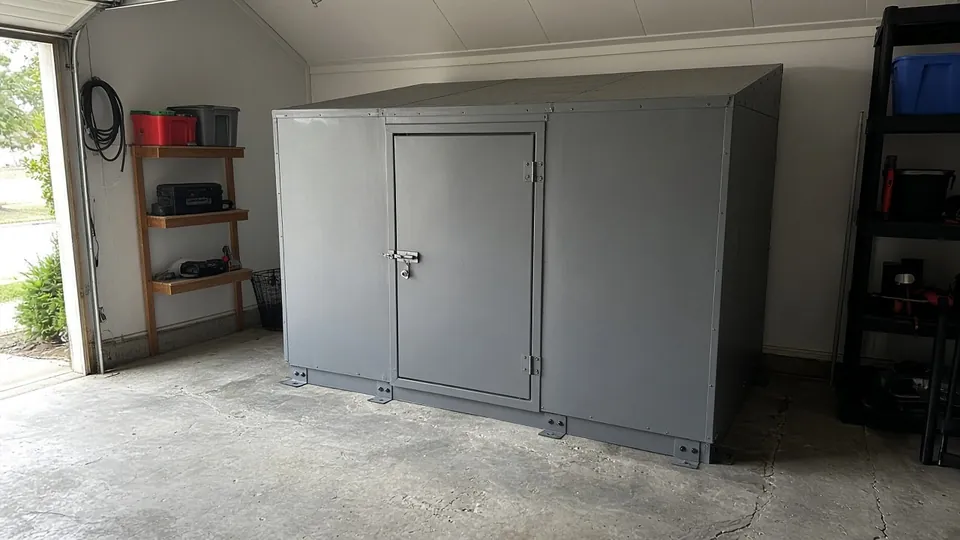
Above-ground steel storm shelter anchored to a garage floor

Above Ground Storm Shelters in Amarillo

An above ground storm shelter is a steel or concrete unit anchored to a slab in a garage, closet or patio. It needs no stairs, which helps people with limited mobility. Its protection depends on the anchoring, the slab and the tested door and walls.

Above-ground shelters are bolted to an existing concrete slab with anchors sized for the forces of a tornado. The slab must be thick and sound enough, so ask the installer how they check it and what they do if it is not.

Because they sit at floor level, these shelters are easy to reach quickly and stay dry. They take up floor space in the garage or room where they are installed, so measure the area and the door clearances first.

Searching for above ground storm shelter cost? No official source lists a price for this type alone. The published ranges for safe rooms are on our storm shelter cost page; actual quotes vary with size, materials and anchoring.

More about above ground shelters →

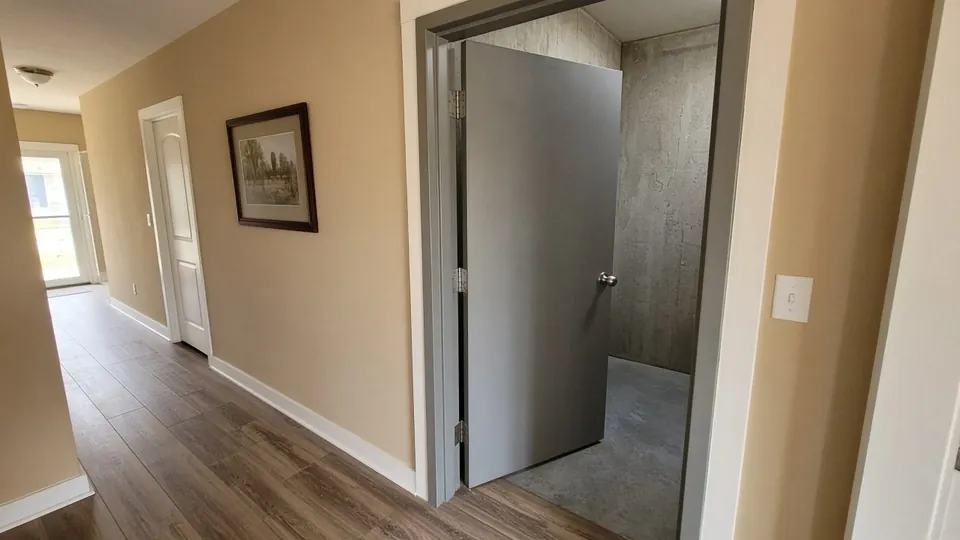
Interior tornado safe room with a heavy steel door inside a home

Safe Rooms in Amarillo

A safe room is an interior room built or reinforced to FEMA P-320 and ICC 500 criteria so it provides near-absolute protection from extreme wind. It often doubles as a closet, bathroom or pantry and is easiest to add while a new home is being built.

FEMA P-320 gives designs for safe rooms built with reinforced concrete, masonry, or wood and steel walls, anchored to the foundation, with a tested door assembly. Because the room is inside the house, it can be reached in seconds.

Newer construction areas in southwest Amarillo, such as The Greenways and City View, are where adding a safe room during the build is most practical. In an existing home, a safe room can be retrofitted, but FEMA notes retrofits generally cost more than new construction.

Ask the builder or installer which FEMA P-320 design or ICC 500-tested product they use, how the room is anchored, and what documentation you will receive. FEMA does not approve or certify products, so be wary of anyone claiming a shelter is FEMA approved.

More about safe rooms →

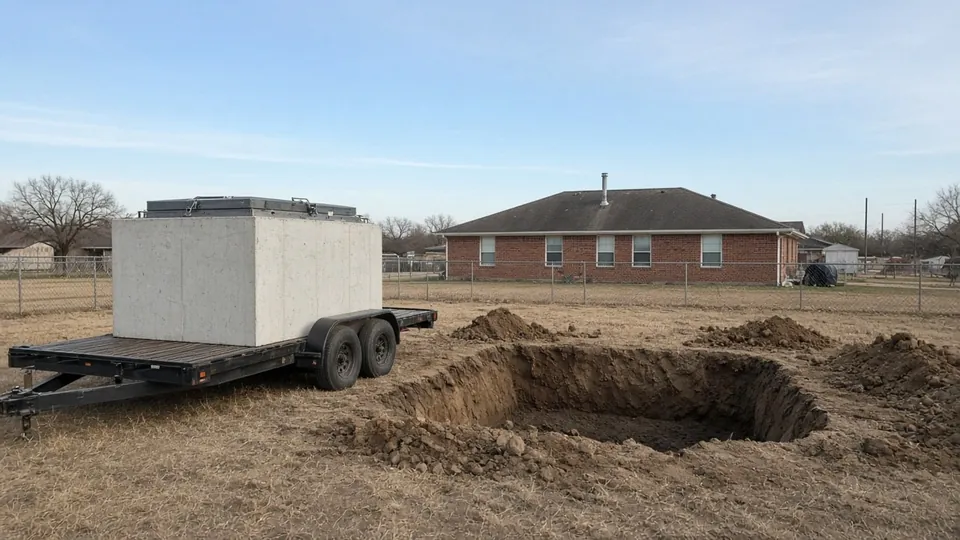
Prefabricated concrete storm shelter unit on a trailer beside an excavated pit

Prefabricated Bunkers in Amarillo

A prefabricated bunker is a factory-built steel or concrete shelter delivered by truck and installed on site, either below ground or anchored above ground. Because it is made off site, installation can be quick, but site preparation and anchoring still decide performance.

Prefabricated units come in set sizes, so choose one that fits everyone in your household with room to sit. FEMA P-320 gives minimum floor area guidance per occupant that is useful when comparing sizes.

Ask for documentation that the model has been tested to ICC 500, and that installation follows the manufacturer's anchoring specifications. Delivery needs truck access to the site, which matters on tight lots or behind fences.

Many Panhandle properties outside city limits, around Canyon, Hereford or Dumas, have the open space prefabricated units need. Rules outside Amarillo differ, so check with your city or county before installation.

More about prefabricated bunkers →

How much does a storm shelter cost in Amarillo?

This site has no prices of its own and no verified Amarillo quotes. The ranges below are published by FEMA and FLASH for safe rooms, with each source linked. FEMA gives two different sets of figures, so both are shown. Your actual quote depends on the factors in the second table.

Published safe room cost ranges (new construction unless noted)
SourceSize or typePublished range
FEMA P-320, Taking Shelter from the Storm (5th ed., 2021), Table II-38×8 ft safe roomAbout $6,300–$8,300 (by wall type; source: FEMA P-320)
FEMA P-320, Taking Shelter from the Storm (5th ed., 2021), Table II-314×14 ft safe roomAbout $11,400–$13,600 (source: FEMA P-320)
FEMA residential safe room fact sheet8×8 ft safe roomAbout $8,000–$9,500 (source: FEMA fact sheet)
FEMA residential safe room fact sheet14×14 ft safe roomAbout $14,000–$17,000 (source: FEMA fact sheet)
FLASH (Federal Alliance for Safe Homes)Site-built and prefabricated safe roomsAbout $3,000–$9,500 by size and height (source: FLASH)

FEMA publishes two different sets of figures (P-320 table and fact sheet), so both are shown. Figures are national averages from those documents, not Amarillo quotes; retrofits generally cost more.

What affects storm shelter cost in Amarillo (no prices of our own)
Cost factorWhy it mattersPrice
Shelter typeBelow-ground, garage floor, above-ground, safe room or prefabricated unit; each has different excavation, anchoring and material needs.Quoted by the installer
Size and capacityFEMA and FLASH ranges rise with floor area; plan for everyone in the household.Quoted by the installer
New construction or retrofitFEMA notes retrofits in existing homes generally cost more than building a safe room during construction.Quoted by the installer
Site and soilExcavation, slab condition, drainage and access for delivery trucks.Quoted by the installer
Doors, ventilation and testingTested door assemblies and ICC 500 documentation.Quoted by the installer
PermitsBuilding work inside Amarillo city limits generally needs a City permit; other areas: ask your city or county.Quoted by the installer
Your projectEstimate request. No verified local prices exist, so this site publishes none of its own. Published FEMA and FLASH ranges are on the cost page.

Full storm shelter cost guide → · Affordable storm shelter options →

How it works, step by step

You send a estimate request, it goes to Silvano Para, and with your consent it is shared with independent installers serving your area. They review your property, give written quotes and, if you hire one, install the shelter. You are never obliged to hire anyone.

  1. Send a estimate request

    Tell us your town or ZIP, the shelter type you are considering and whether it is a new build or an existing home.

  2. Your request goes to Silvano Para

    The operator of this site reviews it and, with your consent, shares it with independent local installers serving your area.

  3. Installers contact you

    They may ask about your lot, garage slab or floor plan and arrange a visit to look at the location.

  4. You compare written quotes

    Ask each installer about ICC 500 testing, the City permit, anchoring, insurance and what is included.

  5. You decide

    You are never obliged to hire anyone. Any contract and payment are between you and the installer.

Permits and standards in Amarillo

A permit is generally required for building work inside Amarillo city limits; confirm with City of Amarillo Building Safety, which issues permits online through MGO Connect. Ask any installer whether their shelter has been tested to ICC 500, the standard that FEMA P-361 relies on.

The City requires contractors to hold a City contractor license before applying for a permit, and homeowners may permit work on their own homestead. Its City of Amarillo residential permits page notes that Amarillo applies the 2021 IRC with city amendments. FEMA does not approve or certify shelter products, so treat any “FEMA approved” claim with care.

Example photos of storm shelter types

These example photos show what each of the six shelter types typically looks like, from in-ground hatches to anchored above-ground units. They are not photos of work by this site or by any specific installer, and real installations vary with the property.

Example photos

Open in-ground storm shelter with concrete steps in a Panhandle backyard
Underground Shelters: Open in-ground storm shelter with concrete steps in a Panhandle backyard.
Reinforced concrete shelter room with a steel door in a home basement
Basement Shelters: Reinforced concrete shelter room with a steel door in a home basement.
Garage floor storm shelter hatch set into a concrete slab
Garage Floor Shelters: Garage floor storm shelter hatch set into a concrete slab.
Above-ground steel storm shelter anchored to a garage floor
Above Ground Shelters: Above-ground steel storm shelter anchored to a garage floor.
Interior tornado safe room with a heavy steel door inside a home
Safe Rooms: Interior tornado safe room with a heavy steel door inside a home.
Prefabricated concrete storm shelter unit on a trailer beside an excavated pit
Prefabricated Bunkers: Prefabricated concrete storm shelter unit on a trailer beside an excavated pit.

Tornado guides for Panhandle households

A shelter only helps if everyone knows when to use it. Our guides explain what a tornado warning means, how to prepare your household before storm season, and how to plan a shelter on a budget, using National Weather Service and Ready.gov guidance.

Service Areas

Requests are accepted from Amarillo, in Potter and Randall Counties, and from five nearby Texas Panhandle towns. Each town has its own page with local facts. Installers confirm whether they cover your address; availability is not guaranteed, especially for Pampa.

Towns covered around Amarillo
TownCountyPopulation (2020)From Amarillo (straight line)
Amarillo, TXPotter & Randall–Main area
Canyon, TXRandall14,836about 17 miles south
Hereford, TXDeaf Smith14,972about 43 miles southwest
Pampa, TXGray16,612about 54 miles northeast
Borger, TXHutchinson12,551about 39 miles north-northeast
Dumas, TXMoore14,501about 45 miles north

Population: 2020 Census via Wikipedia and Census QuickFacts. Distances are approximate straight-line miles; road miles are longer.

Map © OpenStreetMap contributors. The map shows the area only; there is no office or showroom.

Request Shelter Information

Tell us your name, phone, email, town or ZIP, the shelter type you are considering and whether the home is new or existing. Your request goes to Silvano Para and, with your consent, to independent local installers who may contact you.

Referral service notice: Storm Shelters Amarillo (stormsheltersamarillo.com) is a referral service operated by Silvano Para. We do not sell, build or install storm shelters. Your estimate request is shared with independent local installers who may contact you; availability is not guaranteed and we may receive a fee from them. We do not endorse any installer: ask about permits, insurance and ICC 500 / FEMA P-361 testing before hiring. Cost figures are published FEMA and FLASH ranges, not quotes. Photos are example photos. Contact: use the request form.

Estimate request. Independent installers set any price after reviewing your property.

Submitting a request does not confirm an appointment, a price or acceptance of the job. Availability is not guaranteed.

Storm shelter FAQ

Answers to what Amarillo homeowners ask most: whether a shelter is worth it, cost, who installs it, permits, the ICC 500 standard, choosing a type, tornado watches and warnings, and whether any rebate programs exist.

Do I need a storm shelter in Amarillo, Texas?

It is a personal decision, but tornadoes do strike the area: NWS Amarillo lists the May 15, 1949 F4 tornado that crossed south Amarillo, and the NWS confirmed an EF1 in Canyon in April 2025. Ready.gov advises sheltering in a FEMA safe room or an ICC 500 storm shelter.

How much does a storm shelter cost?

This site publishes no prices of its own. FEMA P-320 lists about $6,300–$13,600 for new-construction safe rooms, and FLASH about $3,000–$9,500. See the cost page for sources.

Who installs the shelter?

Independent local installers, not this website. Your request goes to Silvano Para, who operates the site, and is shared with installers who may contact you.

Do I need a permit in Amarillo?

A permit is generally required for building work inside Amarillo city limits; confirm with City of Amarillo Building Safety. Outside the city, check with your city or county.

What does ICC 500 mean?

ICC 500 is the standard for the design and construction of storm shelters, and FEMA P-361 builds on it. Ask installers for documentation that a unit has been tested to it. FEMA does not approve products.

Which type is right for my home?

Homes without a basement often look at garage floor, in-ground or above-ground units. New builds can include a safe room. Mobility, lot size and budget matter too.

What is the difference between a tornado watch and a warning?

A watch means tornadoes are possible, so be ready. A warning means a tornado has been sighted or indicated by radar: take shelter now. See our tornado warning guide.

Are there rebates for storm shelters in Amarillo?

We found no active Amarillo or Texas rebate program. FEMA hazard mitigation funds are sometimes offered through local jurisdictions; ask your city or county emergency management office.